
Important Links
|
Retrospective Document Link
Feedpulse Link |
Weekly Group Retrospective
| Objective: | I wished to create an environment in my group where feedback and collaborative improvement was intuitive by the means for providing regular feedback to one another on a weekly basis. |
| Action: | I created a group document {Fig.1} and modified the charter to facilitate the group feedback. I structured the document to contain 3 main sections, where the group leader provides overall feedback for the group and individual feedback for each member, whilst the rest of the team works gives feedback to the leader whilst providing their own thoughts in their own sections. Summary: Group Feedback Document / Weekly / 3 Feedback Sections |
| Reflection: | The first feedback return from the group was a great success, I believe that we all gained significant insight from our collective feedback. I personally received significant feedback for my own professional conduct as the team leader, and was given advice on how to improve. However, we had some difficulty with punctuality as some feedback was written a few days after the deadline. Summary: Success / Gained Insight / Need More Punctuality |
| Decision: | We decided to continue working with the weekly feedback schedule & document, however from then on we set dedicated feedback sessions every Friday. Where we spent an hour sitting together and getting all the feedback done for the week. Summary: Continue / Make Set Feedback Sessions |
Fig. 1 - Feedback Document
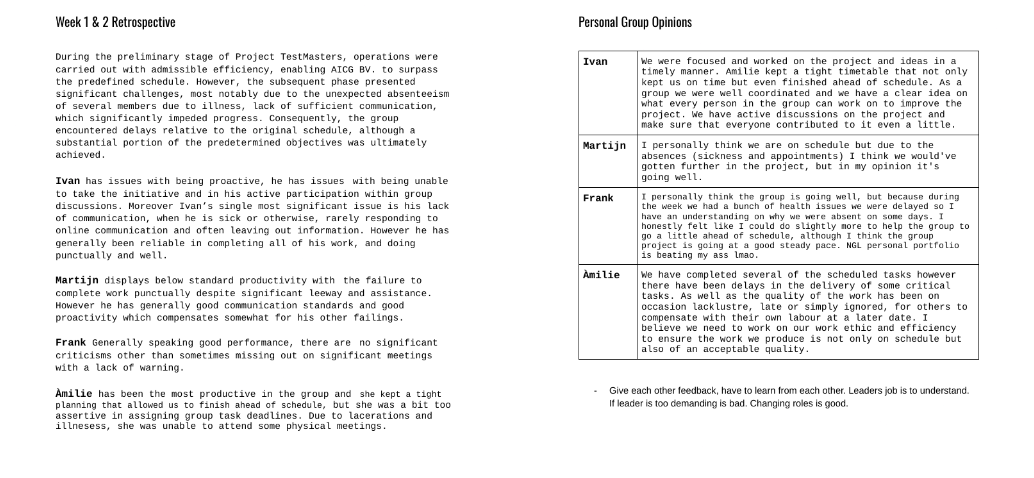
Feedpulse Responses
| Learning Objective: | Take feedback from Teachers and learn how to document but also apply what I was advised of. |
| Action: | After the completion of every major task, such as completing a new page I would approach a member of staff and show off my work, asking for feedback. I will show of an example below. |
| Example Feedback: | Pictured in the bottom of the section, you can see an example feedpulse checkpoint made for me by a teacher. In it, I was told that my use of archaic functions defeated the purpose of a semantically correct HTML Only Page. |
| Reflection: | I would agree with him, realising that it would be best instead to label things with more modern tags and even utilising fake class & id tags within my HTML to make things more semantically transparent. |
| Decision: | I remade the entire page, by adding fake class & id tags, that did not refer to any actual CSS file. But instead they acted as mere placeholders to help with better semantically outline my HTML code. Below you'll see the before & after results. |
Fig. 2 - Feedpulse
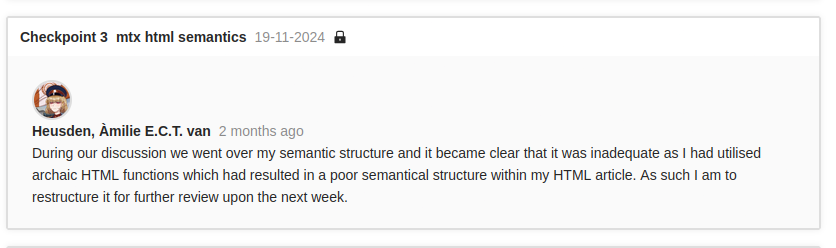
Fig. 3 - Semantics File Before
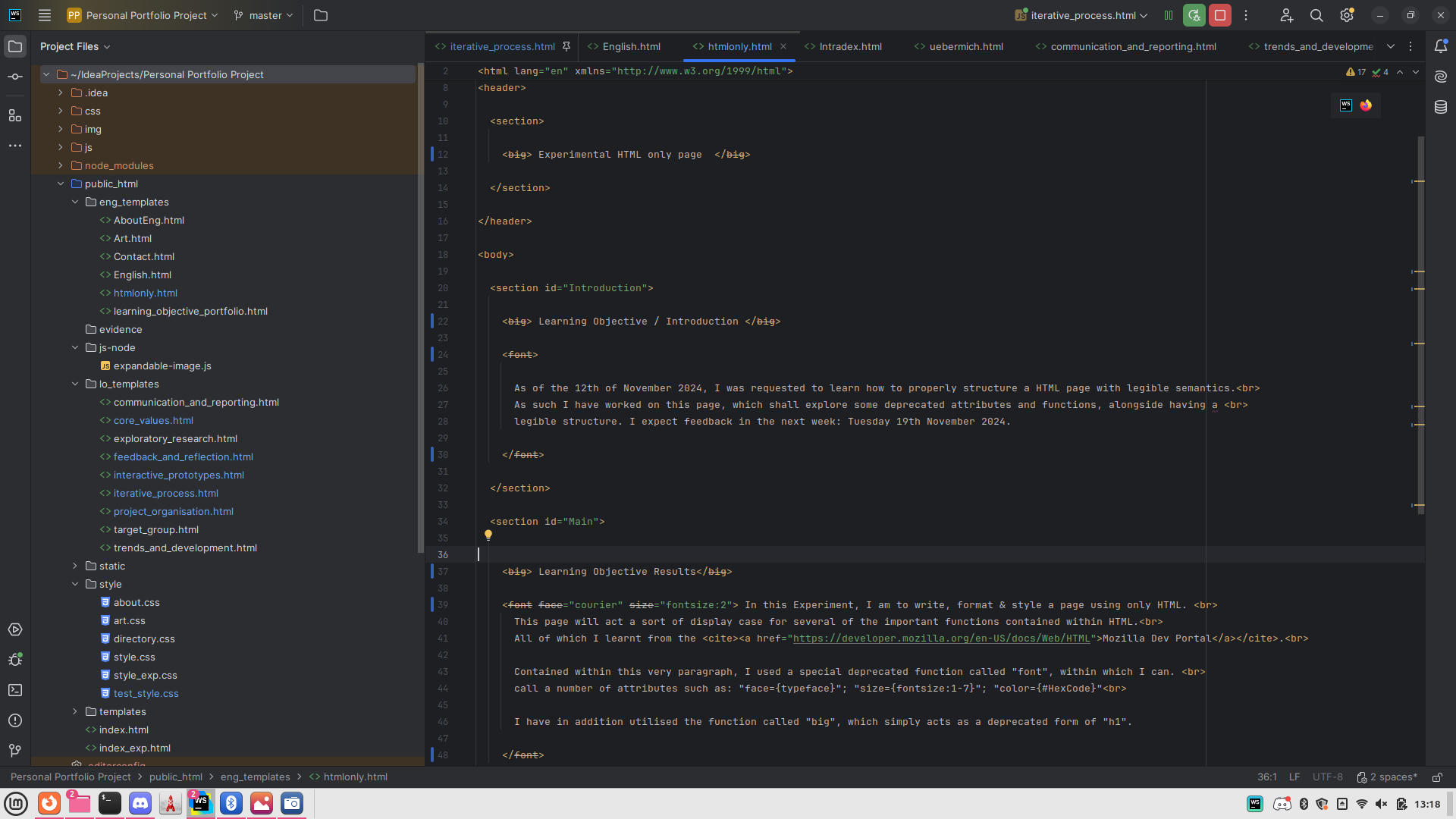
Fig. 4 - Semantics File After
